

Author
Mapping the Future of Bison in a Changing Climate
Date
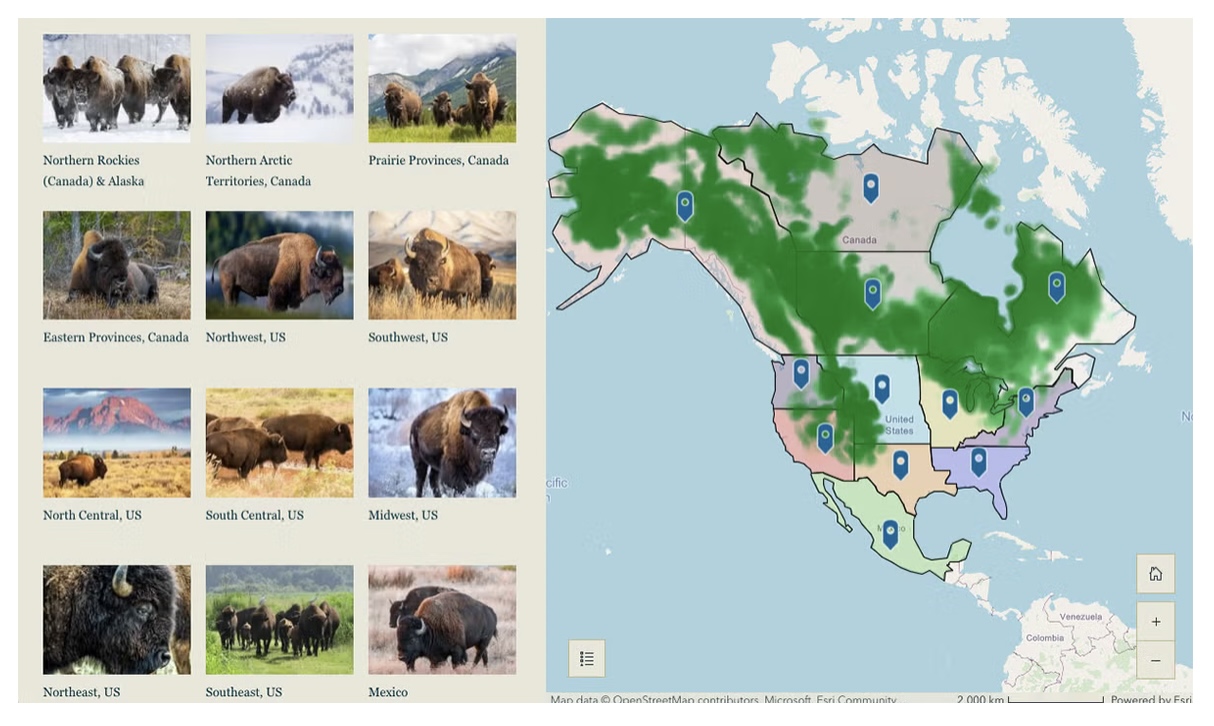
How can climate science help Indigenous communities and conservation managers prepare for the future of North America's bison? The Integrated Bison Mapping Project (IBMP) is turning climate projections into actionable information to support long-term bison conservation and stewardship. Supported by South Dakota State University's Center of Excellence for Bison Studies and INDIGENOUS LED, the project provides interactive maps that help Indigenous caretakers, bison managers, and conservation practitioners explore how changing environmental conditions may affect bison populations.
The interactive StoryMap allows users to explore how suitable climate conditions for bison may shift across North America by 2100. These projections offer a longer-term perspective on the environmental changes that could influence herd management and conservation planning. The project also emphasizes the importance of Indigenous knowledge and stewardship, recognizing that climate projections are most useful when considered alongside the experience and priorities of the communities caring for these animals.
Jeff Martin, South Dakota State University Extension Bison Specialist and co-PI at the NC CASC, explains: "What I like about the Integrated Bison Mapping Project is how we distill complex climate science into practical information that Indigenous buffalo caretakers and other bison managers can use to inform their adaptation planning. Rather than presenting climate projections as technical reports, the StoryMap and interactive mapping tools allow users to explore how future conditions may affect bison habitat and management across North America and in their own backyards. While these tools are not intended to replace local knowledge and experience, they provide an additional source of information that can help managers anticipate challenges, identify opportunities, and make informed decisions that support the long-term resilience of both bison and the communities that care for them."
By connecting future climate projections with the realities of bison stewardship today, the project helps communities and conservation managers plan for changing conditions while supporting the long-term resilience of bison across North America.