

Bringing back bison to Colorado using plant functional traits
By Sam Ahler
Where have all the bison gone?
Bison (Bison bison) were the dominant, keystone grazer across the Great Plains, North America’s largest biome, for millennia and shaped prairie ecosystems (Bell et al. 2004). However, European settlement in the 1800s across this region led to widespread slaughter and near extinction of this once prolific species, with profound impacts on the prairies and Indigenous people whose livelihoods and culture were inextricably linked to the bison. The recovery of bison from fewer than 700 individuals at the beginning of the 1900s is one of the greatest conservation success stories. Subsequent reintroductions, however, can vary substantially in their goals. Currently, bison in commercial ranching operations for meat (~380,000 bison) outnumber those in public agency herds (~15,000), nonprofit NGO herds (~15,000), and those managed by Indigenous people (approximately 25,000).
What has happened to North American grasslands?
Alongside the removal of bison from our grasslands, settlers introduced domestic livestock, namely cattle, that now graze much of the open rangeland. Cattle differ significantly from bison, with important implications for the biodiversity and ecosystem functioning of our grasslands. Additionally, to increase the amount of forage available to these cattle, ranchers introduced a number of non-native forage grasses from Eurasia that can outcompete our native grassland species. These shifts in land use and management have led to the biotic homogenization of many North American grasslands. These degraded grasslands support fewer species, provide reduced ecosystem services, and perpetuate a human disconnect from these ecosystems.
What do bison need from a grassland?
We are working to address some of this historical loss by restoring bison herds across their native range, efforts that can empower Tribes and Indigenous communities by supporting food sovereignty and cultural reconciliation. In 2023, the Department of the Interior announced a $25 million initiative for bison restoration across the Great Plains. In the spring of 2026 however, the Bureau of Land Management revoked grazing leases across the northern Great Plains. Bison need two things: room to roam and biodiverse grasslands. This work tackles the second goal: how can we increase the plant diversity of grasslands to support the future reintroduction of bison and meet their forage needs?
How can we restore our grasslands to meet this need?
The successful restoration of grasslands is a major contemporary challenge given the pressures of development, conversion, invasive species, and climate change. Establishing diverse grasslands requires collaboration between scientists, managers, and local communities. Together, these groups can combat many of these challenges and facilitate the long-term stewardship of restored grasslands. Without this stakeholder engagement though, grasslands may fail to meet our goals for creating diverse and resilient systems that can support grazing animals like bison.
What are functional traits and how can we use them?
Predicting which grassland species will establish, persist, and provide desirable services in restorations is a persistent challenge because of the threats described above. One tool to overcome this challenge is the use of plant functional traits, which are physiological, morphological, and phenological traits of a plant that influence their growth, survival, and reproduction. To restore grasslands to support bison, we can select species with traits that make them resilient to drought—the major environmental bottleneck to restoration success in short-grass prairies—while also providing adequate forage for bison to eat.
To do this, we first established our regional species pool of interest using the Colorado Parks and Wildlife Seed Selection tool. We then selected plant functional traits relevant to our restoration goals—leaf nitrogen, leaf phosphorus, leaf dry matter content, vegetative height, and specific root length. Using a computational tool proposed by Laughlin et al (2018), we set functional constraints on our species pool and generated species assemblages that can be used to develop seed mixes. We repeated this process for a grassland actively containing a bison herd and grassland that will be used as a hay meadow to provide supplemental winter forage (Figure 1).
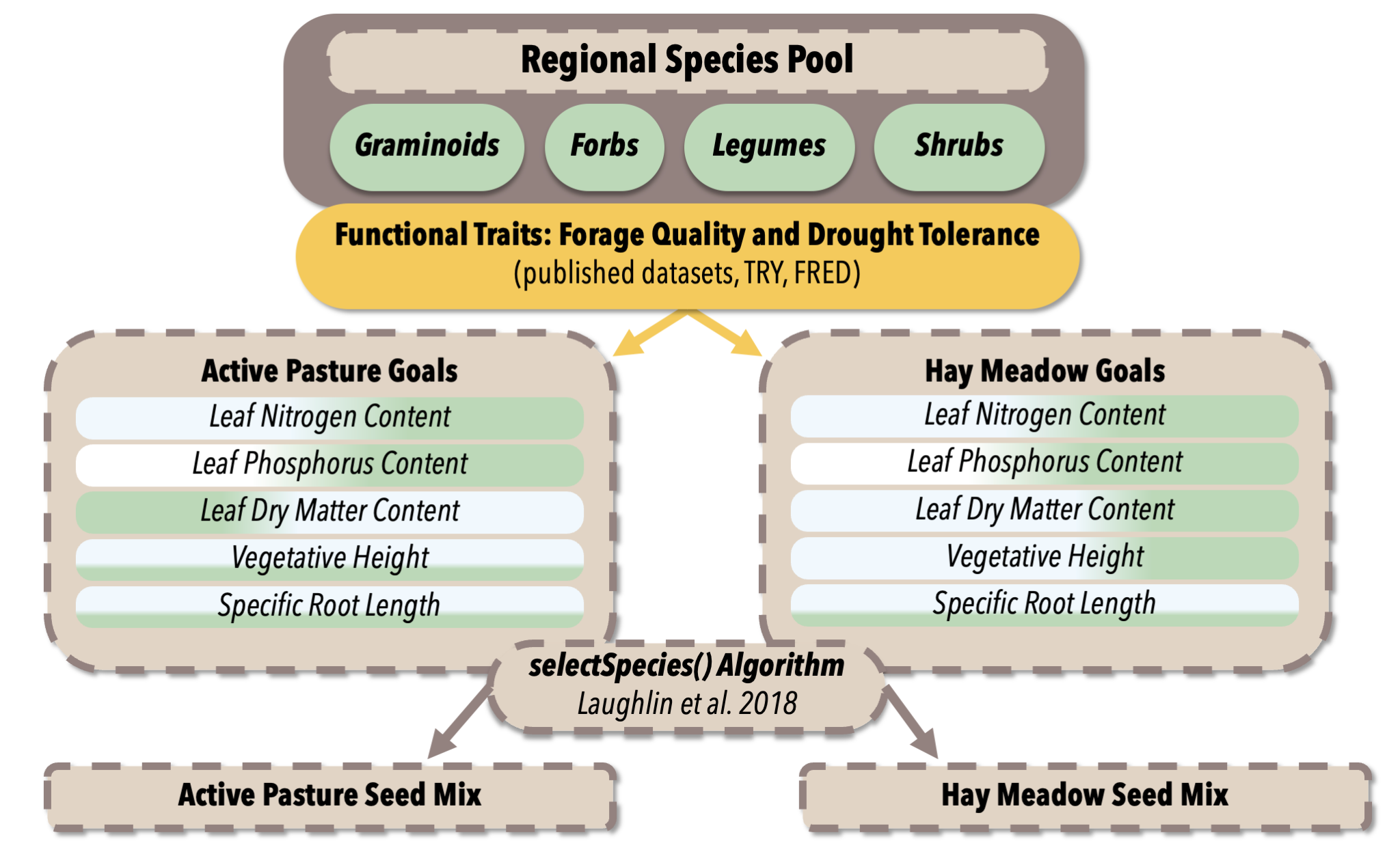
Figure 1. A conceptual diagram of the trait-informed workflow used in this project.
How will this play out on the landscape? Working with Denver Mountain Parks and the Denver Zoo Great Plains Conservation Program
The developed seed mix will be used by Denver Mountain Parks to test the potential for restoring functionally resilient grasslands at their Daniels Park and/or Genesee Park herds. This process was also informed and advised by members of the Denver Zoo Great Plains Conservation Program. Scaling trait-informed grassland restoration to the landscape scale is a significant challenge, but this work is strengthened by collaboration with stakeholder groups that share a passion for supporting bison management and restoration.
About the Author
Sam Ahler recently completed their PhD in Ecology and Evolutionary Biology at CU Boulder. Their work emphasizes the use of functional traits to predict population and community responses, especially in the context of ecological restoration. While the majority of their work focuses on grassland plants, with a particular interest in long lived perennial grasses, they are also interested in holistic grassland restoration. This interest led them to working with bison and the NC CASC, where they drew on their diverse skillsets to facilitate grassland restoration for the sake of bison introduction. Although they hope to work long-term in the grasslands of the Great Plains, they will be on a Fulbright Award in Brazil for the 2026-2027 academic year to study functional ecology and conservation in the most diverse grassland in the world, the Cerrado.