



Author
NC CASC's Practitioner Tools Workshop: Building Climate Adaptation Capacity with Tribal Resource Professionals
Date
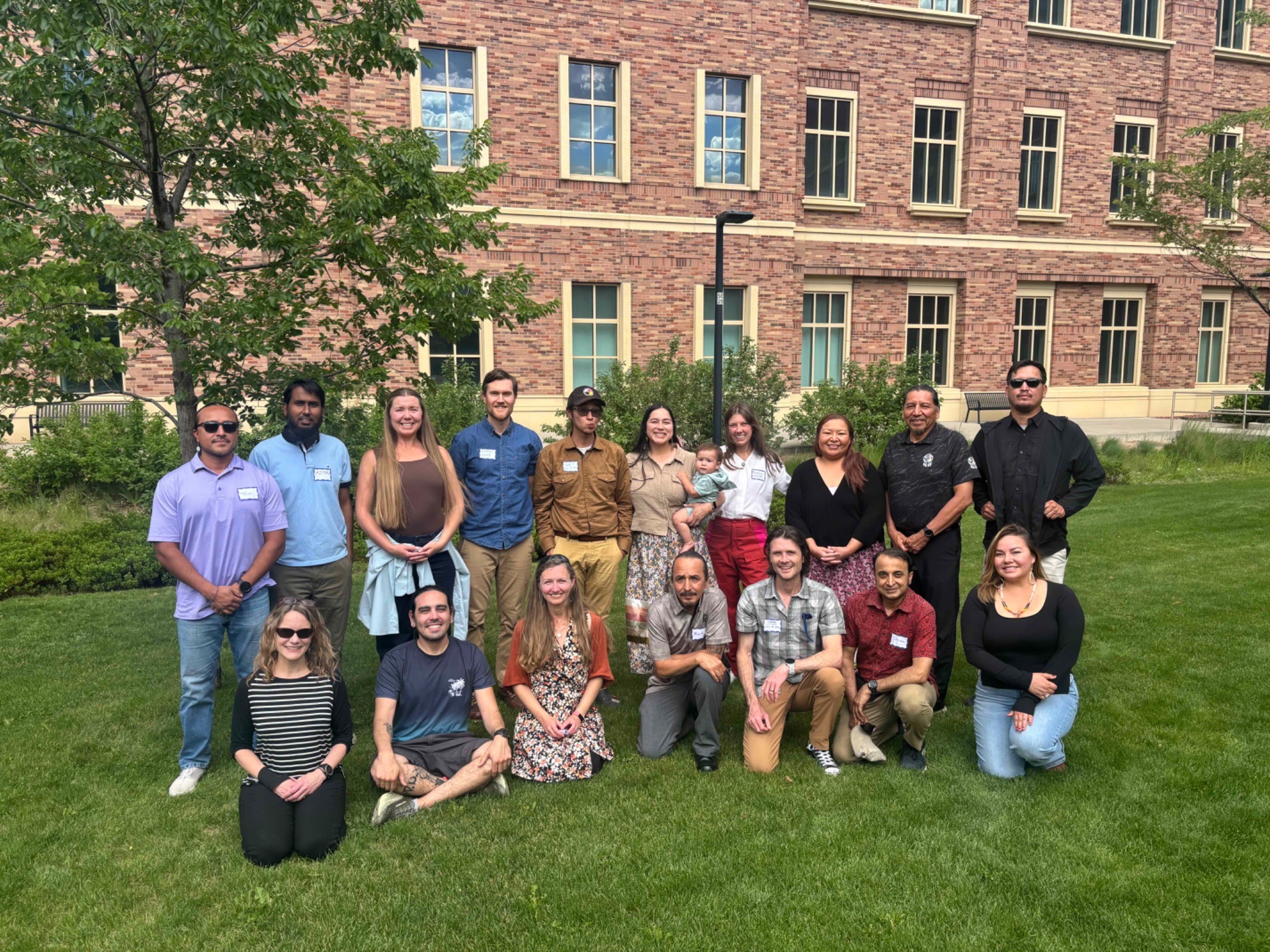
In early June 2026, the North Central Climate Adaptation Science Center (NC CASC) hosted a Practitioner Tools Workshop at the University of Colorado Boulder, designed specifically for tribal natural and cultural resource managers and practitioners from across the North Central region. Eight tribal professionals from different tribes across the north central region attended alongside NC CASC scientists and staff and other collaborators.
The workshop drew on a set of climate adaptation approaches and tools that NC CASC has developed and/or applied over many years in partnership with federal and state land managers, in particular with partners at the U.S. Fish and Wildlife Service and National Park Service. This was an opportunity to offer training from knowledge built over a decade of applications of science and tools to tribal practitioners navigating many of the same challenges, but in contexts that carry distinct cultural, jurisdictional, and community dimensions.
Starting from Community Priorities
Rather than opening the meeting with a discussion on science and tools, the workshop began by creating space for participants to introduce themselves, their land and work, and share what was most on their minds. From that starting point, participants worked through a structured activity to identify the climate vulnerabilities of greatest concern to their communities and landscapes, covering a wide range of potential changes, from drought and reduced snowpack to wildfire, flooding, phenological shifts, and the spread of invasive species.
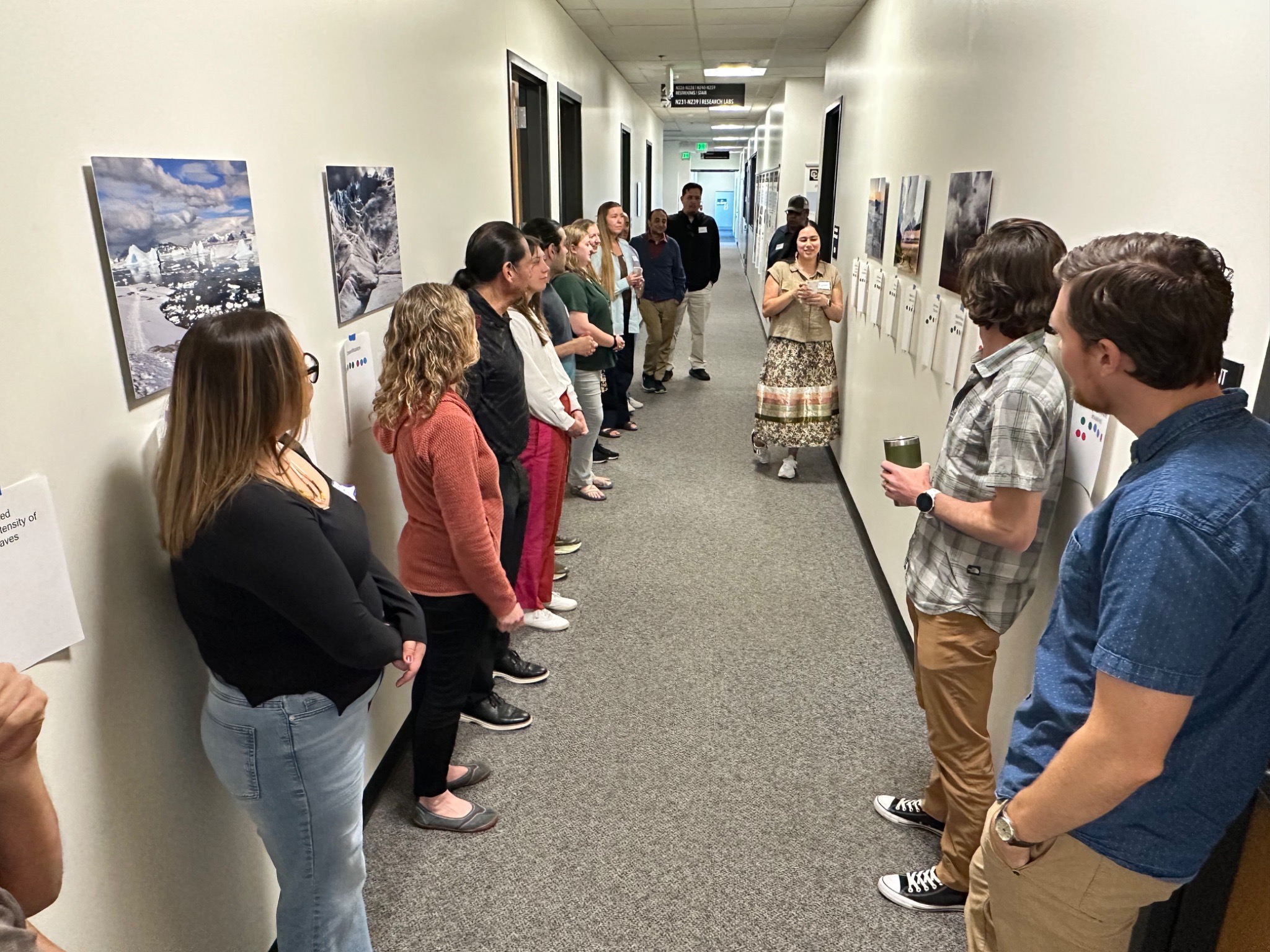
Participants identified a core set of climate concerns:
- Drought, extreme heat, and reduced water availability (quantity, quality, and timing)
- Flash flooding without adequate storage or infrastructure
- Wildfire risk and erosion
- Food sovereignty and loss of culturally significant species
- Compressed or shifting growing seasons
- Managing across multiple ecosystems within reservation boundaries
These reflections helped establish a shared foundation and ensured the technical sessions that followed were grounded in real priorities.
From Climate Science to Practical Tools
The heart of Day 1 brought together climate adaptation science presentations and hands-on tool exploration. Participants were introduced to projected climate changes across the North Central U.S. – particularly around water availability, temperature, drought, and hydrological systems – and to the sources of uncertainty that come with future projections. A key theme throughout was that uncertainty need not be a barrier to planning; the climate adaptation planning cycle offers a framework for working thoughtfully with a range of plausible futures rather than waiting for certainty that will never fully arrive.
A case study from a collaborative project with the Ute Mountain Ute Tribe grounded these concepts in practice, demonstrating how Climate Toolbox (climatetoolbox.org) and scenario planning had been used to develop climate scenarios and inform real adaptation decisions in a tribal context.
In the afternoon, participants moved into hands-on work with Climate Toolbox, working in small breakout groups organized around three specific resources:
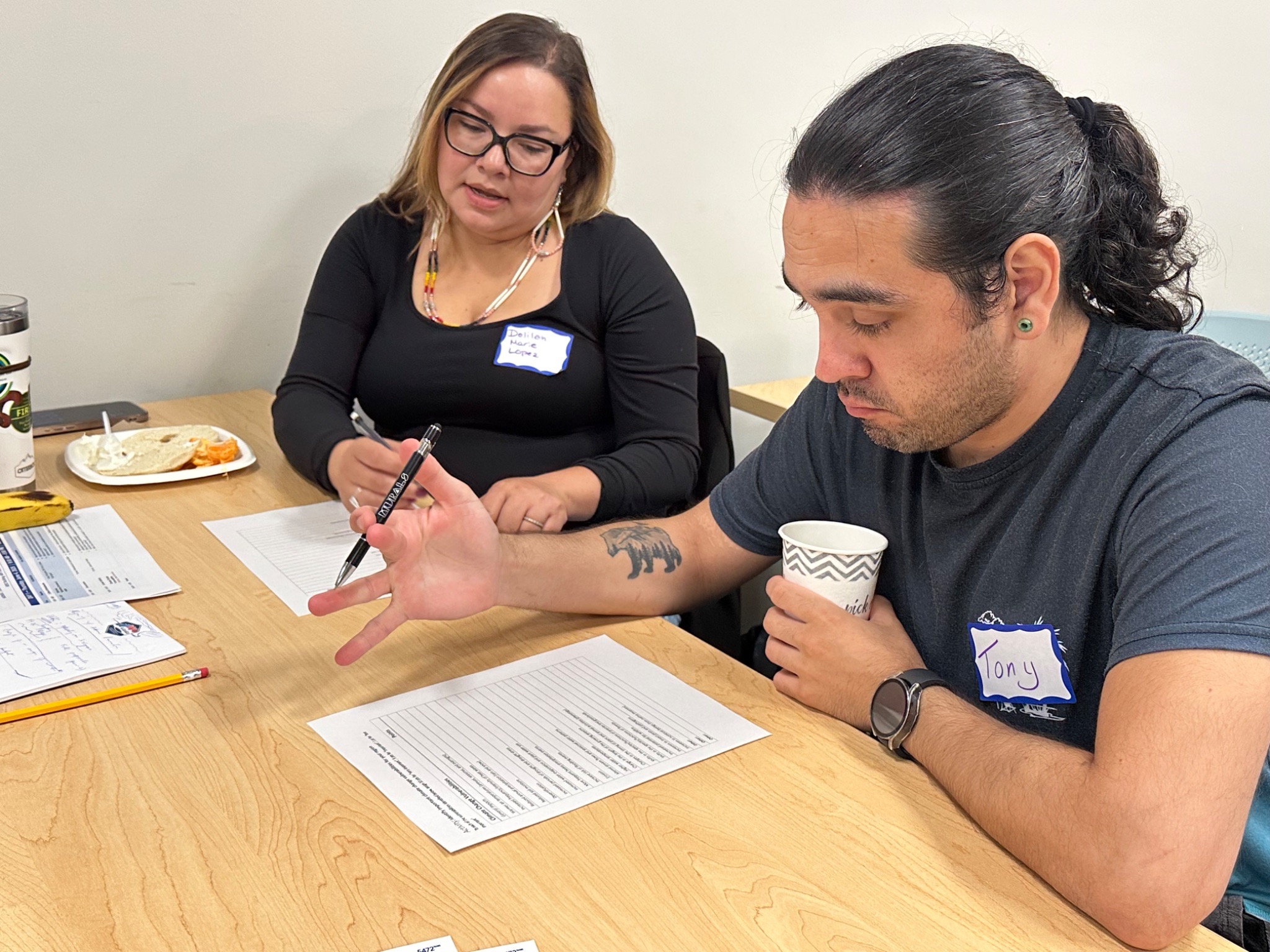
Each group first discussed the climate sensitivities of their focal resource, then used guided tutorials to explore historical climate data and future projections at locations relevant to their work. Participants generated climate scenarios, interpreted tool outputs, and discussed how that information could translate into usable products for reports, grant applications, and planning processes.
The breakout format proved effective for connecting technical content to specific management contexts. As one participant reflected: "I loved being in groups running scenarios on our subject matter. It helped realize the situations that arise that we did not think of on our own. Community similarities are realized, but we still have differences."
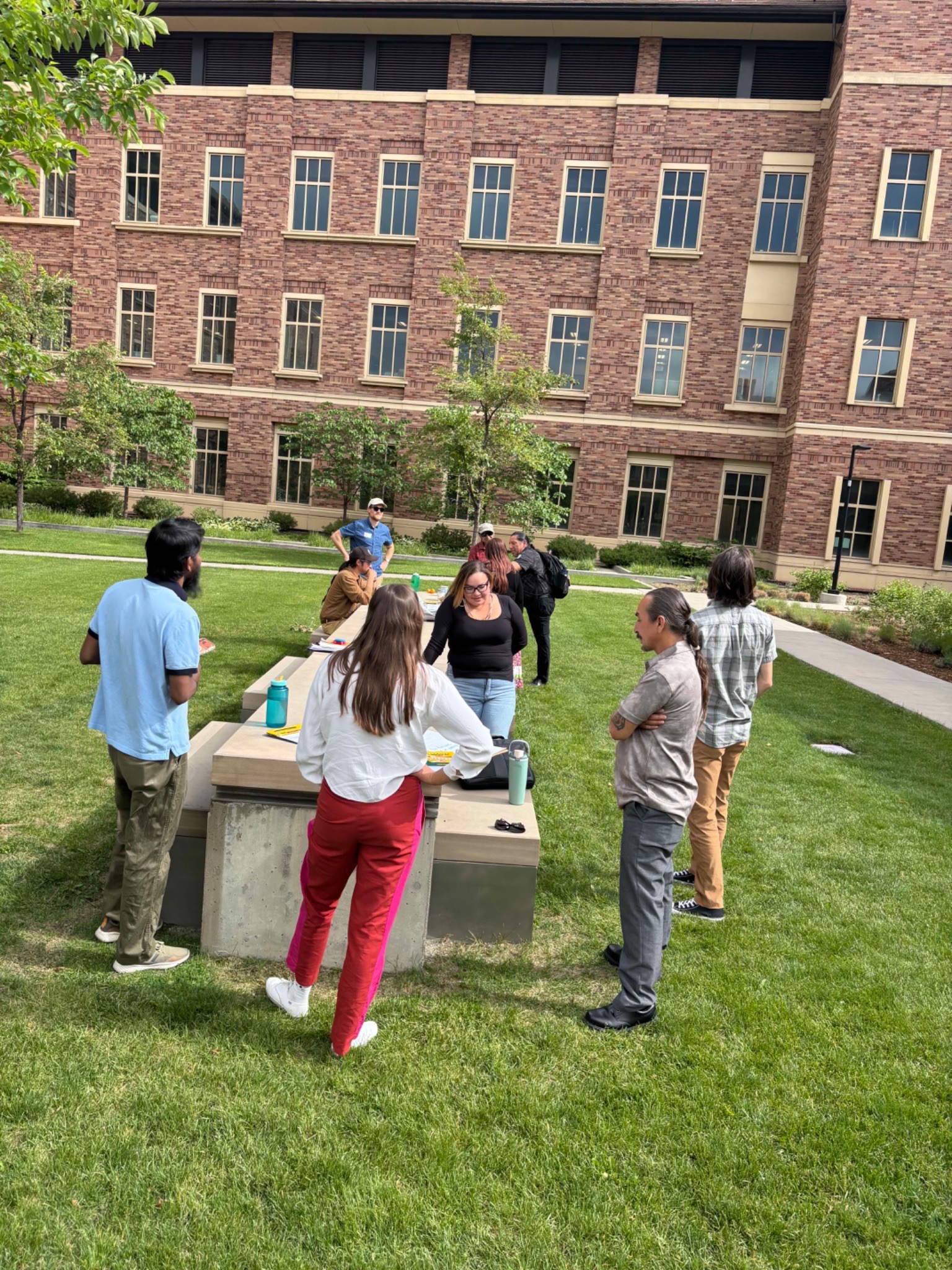
The day closed with group reflection, held partly outdoors, where participants stepped back from the tools to discuss broader themes, emerging questions, and what they wanted to carry forward into Day 2.
Practitioner Voices: Challenges and Opportunities
Day 2 opened the floor more explicitly to tribal partner experiences. In a facilitated listening session, participants used large-format Post-its to map the challenges and opportunities they navigate in their actual work.
Key challenges identified included:
- Capacity: limited staffing, difficulty recruiting qualified personnel to remote communities, and the real constraints created by tribal hiring practices and leadership transitions
- Funding: uncertainty at the federal level, competitive grant landscapes, and the difficulty of sustaining long-term planning efforts
- Terminology: in the current political environment, common terms like "climate," "DEI," and "environmental justice" have become restricted in some contexts, requiring practitioners to adapt how they communicate about their work
- Data sovereignty and sharing: protecting tribally held data from unauthorized access while also navigating internal barriers to information sharing across departments
- Dispersed and diverse communities: planning that accounts for the full geographic, ecological, and social diversity within a single reservation's boundaries
Key opportunities identified included:
- Stronger communication of climate information to Tribal Councils and community members
- Greater visibility for Indigenous voices in regional and national climate conversations
The value of anticipatory, proactive planning, which entails having a baseline understanding of what could happen, rather than only responding after it does
Adaptation Frameworks: RAD and the Tribal Adaptation Menu
The final formal session introduced two complementary frameworks for evaluating and organizing management responses. The Resist-Accept-Direct (RAD) framework offers a way to assess management options in relation to the degree of ecological transformation expected under different climate scenarios. The Tribal Adaptation Menu (TAM), a curated collection of adaptation strategies developed with and for tribal communities, extends that thinking by offering specific, actionable options organized around tribal management priorities.
Discussion explored how NC CASC could support future training for the TAM and how climate tool training and adaptation menu workshops might be combined into future programming. Participants raised the question of funding opportunities that could make such integrated training accessible across more tribal communities.
What Participants Took Away
Post-workshop evaluations reflected a broadly positive experience. Across the board, participants indicated that the workshop increased their understanding of potential climate impacts, climate tools, scenario planning, and how NC CASC can support tribal climate adaptation. Several consistent themes emerged in written responses:
- The collaborative atmosphere and time for discussion were among the most valued elements
- The tools are seen as directly applicable, though more time to go deeper would be welcome
- A follow-up virtual session, where participants can watch screen walkthroughs and ask questions in real time, was frequently requested
- Interest in integrating Climate Toolbox outputs with ArcGIS and other platforms already in use
- Several respondents expressed interest in future collaboration, including potential grant partnerships
"I learned something from each presentation and thought exercise. I feel like I have something I can use to continue to learn from. The tools presented have a place in my work; I just need to learn more about them and use them."
"It was very reaffirming and refreshing. The space felt inviting and created the perfect environment to learn."
On workshop length, multiple participants indicated the 1.5-day format was too short, suggesting that a full two-day workshop would better meet the depth of interest that already exists.
Looking Forward
The workshop pointed toward several concrete next steps: virtual office hours for continued tool support, deeper-dive sessions on specific tools, integrated training that combines climate scenario planning with the Tribal Adaptation Menu, and continued engagement through the NC CASC Tribal Liaison network.
More broadly, it demonstrated that there is both the interest and the need for this kind of programming. As climate change continues to affect tribal lands, natural resources, and culturally significant species across the North Central region, accessible tools and strong institutional relationships will matter. This workshop was a step toward building both.
As one participant framed it, the tools and approaches introduced support "7-generation thinking," the kind of long-horizon, anticipatory planning that has always been part of Indigenous land stewardship, and that climate adaptation science increasingly recognizes as essential.
The NC CASC Practitioner Tools Workshop was a collaborative effort involving scientists and staff from the University of Colorado Boulder, Great Plains Tribal Water Alliance, and USGS.
The author used ChatGPT (GPT-5.2) for language editing and content organization.