


Author
Rooted in Knowledge: Advancing Climate Adaptation Through the Tribal Adaptation Menu
Date
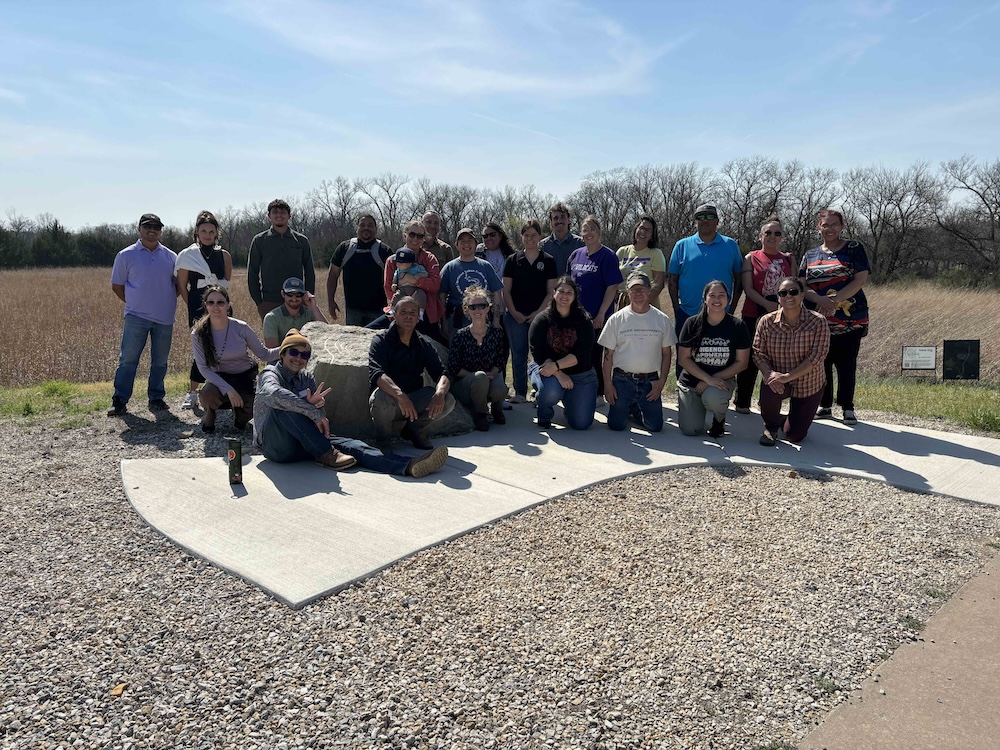
This April, the Haskell Indian Nations University campus in Lawrence, Kansas, became a space for a different kind of climate conversation. Thirty representatives from four Kansas Tribal Nations, alongside community members, NC CASC representatives, and Tribal leaders, spent three days working through the Tribal Climate Adaptation Menu (TAM). The workshop was designed around dialogue and co-learning, moving away from a one-way transfer of information. By emphasizing reciprocity, participants shared their own expertise while learning from one another’s experiences. As one participant reflected, “The most useful part of the workshop was the discussion and activities around my project, as it really helped put everything into perspective for me.”
The Tribal Climate Adaptation Menu is a tool specifically built to empower Tribal Nations and agencies to integrate Indigenous perspectives into climate planning, ensuring that the protection of natural resources also means the protection of cultural heritage. It was developed by a diverse collaboration of Tribal, academic, and government entities, addressing a gap in traditional planning tools that often overlook the unique cultural values and needs of Indigenous communities. While the current version is rooted specifically in Ojibwe and Menominee perspectives and languages, it is designed to be a flexible "living document" that other Tribal Nations can adapt to their own specific cultural contexts. The menu organizes extensive adaptation actions into 14 overarching strategies such as sustaining ecological functions and encouraging community transition while providing "Guiding Principles" to ensure that non-Tribal partners interact with Tribal Nations with respect and reciprocity.
The workshop focused on four main goals designed to bridge the gap between initial planning and real-world action. This started with centering Indigenous Knowledge by treating traditional teachings and long-term observations of the land as the primary foundation for climate work. From there, participants worked on developing tailored, culturally relevant adaptation steps, such as strategies to protect specific traditional foods and medicinal plants. The sessions then moved from framework to practice, helping attendees translate the broad TAM goals into concrete, localized projects. Throughout the entire process, a heavy emphasis was placed on upholding sovereignty, ensuring that all climate partnerships respect Tribal leadership and prioritize ethical engagement. “We came together as relatives, we shared in a good way, and we left carrying seeds - of knowledge, of connection, and of responsibility. Now it’s time to tend to them,” says Janna Black, Tribal Climate Resilience Liaison for the North Central Climate Adaptation Science Center (NC CASC).
As climate change increasingly impacts the United States and the North Central region, Tribal Nations are helping to lead development of innovative solutions. Workshops like this highlight how climate resilience can be more effective when it also includes Indigenous leadership. The NC CASC supports these efforts by providing scientific resources and fostering partnerships that elevate community-driven approaches, while also ensuring that regional climate strategies are equitable and grounded in local priorities.