

News
Join us for the next Joint Stakeholder Committee (JSC) Listening Session on Grasslands
The NC CASC and USDA Northern Plains Climate Hub will hold a series of topic-based listening sessions with the Joint Stakeholder Committee (JSC) and their team members. The JSC provides guidance, coordination, and collaboration to these two unique but complementary entities and helps facilitate communication and awareness for federally funded climate research.
NC CASC Webinar Series: Resist-Accept-Direct (RAD) Framework for Modern Natural Resource Management and Action
Strong climate trends and other modern human drivers effectively place ecosystems in new contexts with new challenges for managers and society. Mounting costs of restoring past conditions or even “holding the line” to preserve current conditions are increasingly likened to paddling upstream.
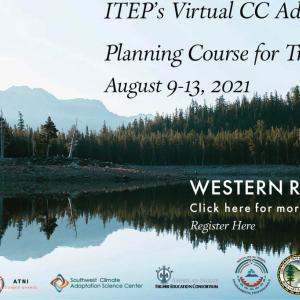
Join ITEP for a Virtual Climate Change Planning Course for Tribes
Join the Institute for Tribal Environmental Professionals (ITEP) for the virtual course, "Introduction to Climate Change Adaptation Planning (Western Region)," from August 9th-13th.

Imtiaz Rangwala Quoted in The Guardian on Recent Heat Wave
Imtiaz Rangwala, the NC CASC’s Climate Science Lead, was quoted in an article in The Guardian, “Record-shattering heat wave bakes Western US, raising drought and fire concerns,” on June 18th.
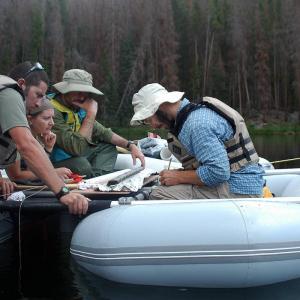
Read Phil Higuera's Article on Rocky Mountain Wildfires
NC CASC Consortium Partner and PI Phil Higuera, at the University of Montana, recently wrote an article for The Conversation, “Rocky Mountain forests are burning more now than any time in the past 2,000 years.”
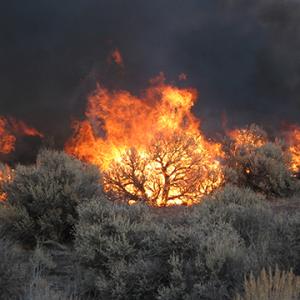
Check out USGS' Land Treatment Exploration Tool
A new USGS tool, the "Land Treatment Exploration Tool" was just released as a part of a NC CASC-affiliated project, "Improving the Success of Post-Fire Adaptive Management Strategies in Sagebrush Steppe."

Read the Latest Tribal Climate Newsletter
Read the June 2021 edition of the Tribal Climate Newsletter.
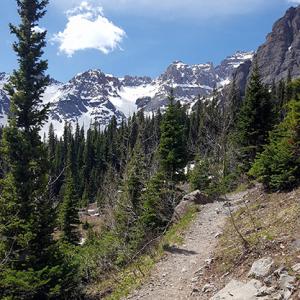
Three New Projects Fully Open at NC CASC
Three new projects, all with USGS PI's, are now up and running at the NC CASC. Information about each project can be viewed below.
Paper Co-Authored by Imtiaz Rangwala Receives SWCS Award
A paper co-authored by the NC CASC’s Climate Science Lead, Imtiaz Rangwala, was named the 2021 recipient of the Journal of Soil and Water Conservation Editor’s Choice Award by the Soil and Water Conservation Society.
Watch the Latest Tribal Webinar
Watch the latest tribal webinar, "Tribal Drought Conditions and Actions in the North Central," which discusses the updates and projections on drought conditions in the Missouri River Basin focused on Tribal lands.