

News

2nd Chapter of USGS Grasslands Report Published
The second chapter of the USGS Grasslands Report has been published! It was edited by NC CASC Actionable Science Lead, Christine Miller Hesed, and NC CASC Lead Social Scientist, Heather Yocum.
Ulyana Horodyskyj Peña
New Publication on Climate Change Adaptation in National Parks
A new study quantifies both the magnitude of projected mid-century climate change and the associated uncertainty within 332 national park units in the continental United States.
Ulyana Horodyskyj Peña
New Publication - Grass Invasion in Prairie Pothole Region
The Prairie Potholes Region of the northern Great Plains is under threat from the combined effects of introduced perennial grasses and climate change, which are driving plant community shifts and biodiversity loss. Check out a new publication about this from the NC CASC's RCAP (Rapid Climate Assessment Program).

New RCAP synthesis publication on climate change in high-elevation ecosystems
In the summer of 2023, Meagan Oldfather and Alyson Ennis led a project in the NC CASC’s Rapid Climate Assessment Program (RCAP) titled “Synthesis of Climate Adaptation in Mountain Ecosystems in the North Central Region.” The results of this RCAP are described in a new synthesis paper.
New Publication Available - Drought Vulnerability Assessments
A new publication is now out on Ecosphere, an ESA open access journal, with NC CASC co-authors Shelley Crausbay, Molly Cross, and Imtiaz Rangwala.
New Publication: Approaches for Using CMIP Projections in Climate Model Ensembles to Address the ‘Hot Model’ Problem
A new publication from USGS, the NC CASC, and the University of Oklahoma discusses approaches for using CMIP projections in climate model ensembles to address the 'hot model' problem.
New Report: Climate Change in Colorado
A recent report led by Becky Bolinger and colleagues at Colorado State University synthesizes and highlights the most recent research on climate change in Colorado. This is the third edition of “Climate Change in Colorado.” NC CASC Social Science and Climate Science Leads, Heather Yocum and Imtiaz Rangwala, reviewed and contributed to this report.
New “Innovation in Climate Adaptation” Report from CASC Network and Partners
Innovation in Climate Adaptation was produced by National Wildlife Federation, the USGS CASC network, and the IUCN Species Survival Commission Climate Change Specialist Group with input from an “international workgroup of adaptation experts.” The report was published yesterday (Jan. 17, 2024) with NC CASC’s Regional Administrator Molly Cross as a lead author.
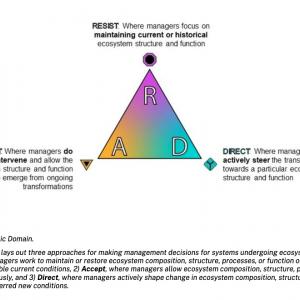
Balancing Management Objectives in a Time of Climate Change
New NC CASC-funded research is now out, in a paper discussing the challenges of ecosystem management in the face of climate change. It suggests that traditional methods based on historical conditions may be inadequate due to ongoing ecological transformations.
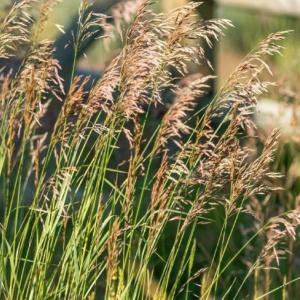
New RCAP 4-pager on the Prairie Pothole region
The Prairie Pothole Region (PPR) spans ~170 million acres in the northern Great Plains, characterized by mixed-grass and tallgrass prairies as well as composed of native cool- season (C3) and warm-season (C4) grasses, interspersed with abundant wetlands or “potholes.” To safeguard biodiversity and maintain wildlife habitat, grassland conservation is a management priority on the nearly 1 million acres of National Wildlife Refuge System lands in the region.